If you frame with steel, you’ve had this conversation. The owner, the GC, or the homeowner looks at a bundle of studs and asks, “Won’t that rust?”
Now you can answer with a number. The NAHB Research Center put galvanized steel framing inside four real homes for ten years and measured how much coating wore away. We’ve posted the full study at the bottom of this page so you can read it yourself or pull it up on your phone the next time someone asks. Here’s what we think it means for your business.
You can stop defending steel and start selling it
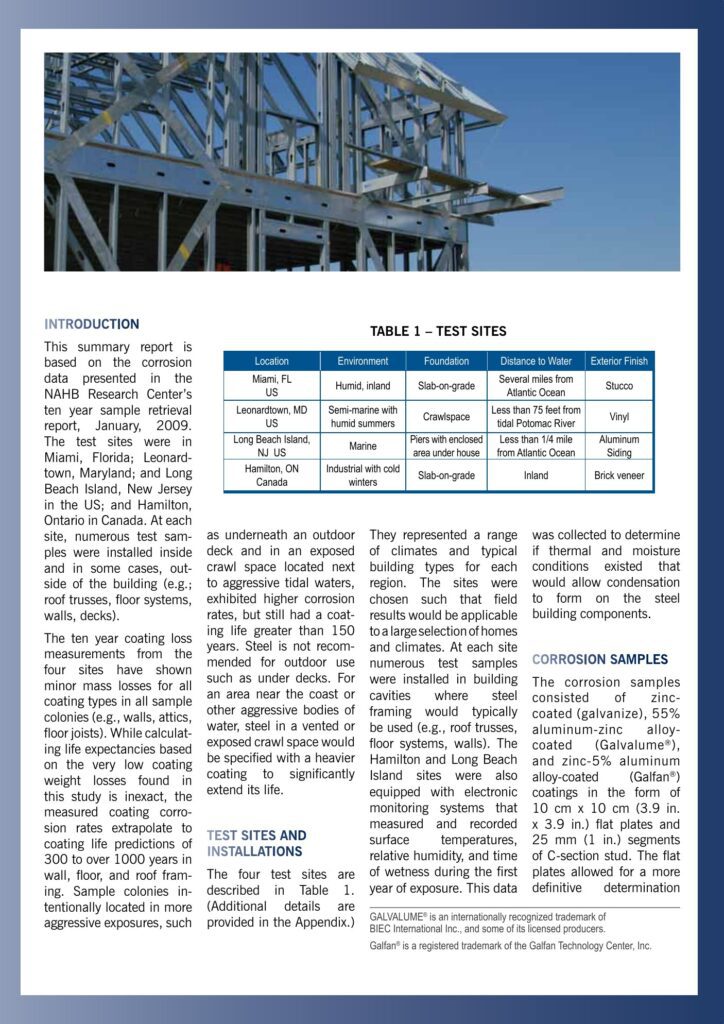
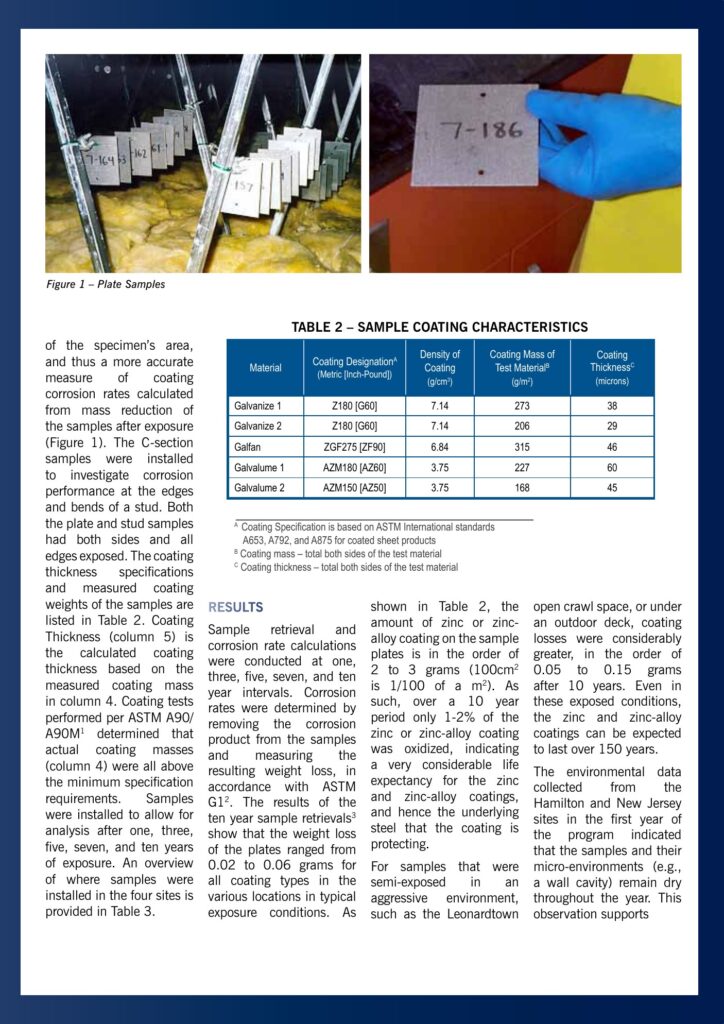
After ten years inside walls, attics, and floors, the samples had lost 1 to 2 percent of their zinc coating. At that pace the coating lasts 300 to over 1,000 years. The researchers say that math is rough because the losses were so small, but the takeaway doesn’t change: the framing will outlast the building, the mortgage, and everybody on the job.
That matters when you’re bidding against wood. Steel doesn’t rot, and termites can’t eat it. With this study you can also show it isn’t going to rust away inside the wall. The zinc industry paid for the study, but the home builders’ own research center ran it, in real houses, and a separate ten-year study in the United Kingdom came back with the same results. Put that next to the cost savings of metal framing and you have a solid answer for an owner who’s on the fence.
It doesn’t matter where you build
The four test homes were picked to cover a wide range of conditions: humid Florida, a beachfront house on the New Jersey shore, a Maryland house that takes salt spray off a tidal river, and an industrial area in Ontario with cold winters. The framing inside the walls and attics barely changed at any of them.
Sensors at two of the houses showed why. A closed wall cavity stays dry all year, and zinc doesn’t wear when it stays dry. So the risk isn’t the weather outside. The risk is steel left open to it. Once the building is dried in and the framing is inside the envelope, it’s protected in any of those climates.
The study tested actual pieces of stud too, with the cut edges and bends exposed, and those held up just like the flat samples. That covers the other question you always get: “What about where it’s cut?”
Bid the right coating and you won’t get the callback
The galvanized samples in this study were G60, the standard coating on everyday studs and track. For interior framing, that’s all the job needs, and this study is the proof. You don’t have to pay for more coating than the job calls for.
The study is also clear about where standard coating isn’t enough. At the Maryland house, 75 feet from salt water, bare steel in the crawlspace showed red rust in two months. The galvanized samples next to it still projected past 150 years, but the researchers say steel in a vented or open crawlspace near the coast should get a heavier coating, and that steel framing shouldn’t be used fully outdoors, like under a deck. So on exterior walls, near the beach, over an open crawlspace, or anywhere salt air can reach the framing, that’s where we recommend G90. It carries 50 percent more zinc than G60 and costs a lot less than a callback. We stock it, and our guide to steel framing in coastal and high-humidity climates covers the details that go with it.
One more thing to keep in mind is that this testing was done in houses. The same logic holds for any closed-in wall or ceiling on a commercial job, but exposed conditions are always their own conversation. If you’re not sure which side of the line your job falls on, ask us.
Let’s price your next job
We ship studs and track anywhere in the country from Forest Park, Georgia. Use our Price Calculator to get a quote today, pull specs from our Submittal Builder, or contact us and tell us where the job is and what you’re building. We’ll quote it in the right coating the first time.
The full ten-year study summary from the International Zinc Association and the NAHB Research Center is below.